Microdramas are revolutionizing classic storytelling and production methods. This new series format requires a plot with rapid twists and turns that lead to a cliffhanger to trigger a binge-watching effect. The short, compact episodes in vertical format are tailored to match the average attention span for online videos, which averages 2.7 minutes.
The booming microdrama market, which originated in China, is thrilling a billion-strong audience, and this fast-paced format has now reached streaming services and Hollywood studios. In Europe, Black Forest Studios is focusing on the production of these condensed drama series, which is being filmed very efficiently on either fixed sets or on location.
“Production is much more energy-efficient than conventional formats, since we work a lot with existing light and smaller units”, explains Sebastan Weilland, producer and CEO of Black Forest Studios. The film crew for a microdrama usually consists of twelve to fifteen people and a few actors. Compared to classic traveling productions with sixty to eighty cast, crew, and team members touring Germany or Europe, the carbon footprint is correspondingly much lower.
“Since we produce a micro-drama series in one- to two-minute episodes on a much smaller scale, the turnarounds are much faster”, explains the studio boss. “We shoot sixty to eighty episodes in twelve to fifteen days.” The scripts are developed with several writers. “Microdrama is the Netflix series for the TikTok generation”, says studio co-founder and creative director Nina Gwyn. “It’s our response to changing media consumption habits, bringing European storytelling directly to smartphones.”
The vertical format requires a different approach to image design. This aspect must be taken into account when writing the script, since a vertically filmed set or landscape differs significantly from classic film aspect ratios. The resource-saving production method is reflected in the budget. While the production costs of a conventional series range from one and a half to ten million euros, the budget of a microdramaseries ranges from 200,000 to 300,000 euros. In China and the US, apps offer this audio-visual format on numerous platforms.
In order to develop all aspects of the production workflow, including its own streaming app, the studio owner has assembled an international board of consultants, which includes House of Cards actor Boris Kodjoe. “We set ourselves the goal of producing higherquality content on topics that interest Europeans”, emphasizes Weilland. Black Forest Studios earlier attracted international attention in 2021 with its Academy Award®- winning documentary about Russian opposition figure Alexei Navalny.
“The time for half-measures and climate denial is over. Unless we move quickly away from fossil fuels, we’re going to destroy the air we breathe, the water we drink, the health of our children, grandchildren and future generations. If we’re going to avoid the worst of the impacts, then we’ve just got to act boldly. And we must act immediately."
Robert Redford
Actor, Director, Producer, Environmentalist
"The media has a powerful role to play in the fight against climate change. Through films, television, and all media outlets, we must continue to deliver the message that solutions are out there and are happening now. We have to make it attractive for people to take action. Movies like Avatar, The Day After Tomorrow, and documentaries like Years of Living Dangerously, which I was proud to be a part of, have been very popular, reaching and inspiring millions of people. And I believe films in particular can really inspire and make people want to take action. It’s great to see some of my film-industry friends working with climate related organizations to push forward those messages."
„It‘s high time to reorganize film production in Germany in a ‚greener‘ and more sustainable way. So far, I am flabbergasted by how much our industry works in environmentally harmful ways.To this very day, it starts with until today one-sided print-outs of scripts, and then it continues with plastic bottles in production offices and lots of plastic waste with every catered meal, and it doesn‘t stop with the limousines that pull up to a red carpet.
For many years, people have sneered at me when I brought my own cup or I declined to eat cheap meat served on paper or plastic plates with plastic knives and forks. It would be great if the Green Shooting Card could change all that.“
Director (Ben X, Time of My Life)
„It’s absolutely great that filmmakers all over the world are trying to clean up their act, and are trying to film as sustainable as we possibly can. Still, I think we shouldn’t underestimate the incredible power of the moving image to also change the hearts and minds of people.
So, apart from trying to be more environmentally aware in our business, I think the big gain lies in how we might make everyone more environmentally aware. Yes, cinema can change the world.
I think filmmakers should start using the powerful weapon in our hands that is the camera.
Let’s not only try to do ‘less bad’. Let’s try to do right, and help drive the change that we all know needs to arrive.“
“We are living in a time in which we can’t afford to behave irresponsibly towards nature. The more important is it that film productions try to work as environmentally friendly as possible. A film team produces every day tons of garbage. I try to avoid using plastic cups on set, I bring my own cup, use ecofriendly cosmetics and avoid needless single rides.”
Photo ® Maddalena Arosio
Darren Aronofsky, Director, Noah / Jury President, 65th Berlin International Film Festival
“When we did Noah we knew we were making a film about the first steward of the earth, so we wanted to be good stewards ourselves. There’s so much waste on film sets. Because of groups like Earth Angel, we were able to change that a little bit.”
"As a TV and film producer I try to incorporate environmental storylines into my projects as much as possible. But it’s just as important, if not more, to ‚go green‘ behind the scenes! Therefore, I help run the Producers Guild of America’s Green Initiative.
We provide resources such as a Best Practices and a Carbon Calculator to help producers green their productions. We also partnered with all the major studios to create www.greenproductionguide.com which is a free green vendor database with over 2,000 vendors offering sustainable production solutions worldwide!"
‚Green screens excepted, we will do everything in our power to be as innovative as we can in order to make our production as green as possible.‘
Photo: (c) herbXfilm Dieter Mayr
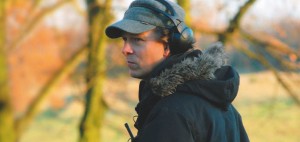
Lars Jessen
Director (Fraktus, Dorfpunks, Am Tag als Bobby Ewing starb)
‘It is somewhat embarrassing that green filming is only now becoming an issue in our industry because there have long since been many possibilities to shoot more efficiently.
Technical innovations such as energy efficient lighting are as much a part of this as the awareness of every crew member.’
I do work with a company in the States called Sungevity that leases solar panels to homes. They figured out how to move forward environmentally and how to make it economically successful.
So that’s my small but steadfast global contribution. I think everybody doing a little bit is all that’s made any difference, ever.‘
Producer, Director and Visual Effects Supervisor (2001: A Space Odysee, Blade Runner)
"Trumbull Studios in Massachusetts is dedicated to being green as much as possible, including the use of LED lighting, solar power, and solar laptops. This is not just because our location has limited amperage and no three-phase, we believe we have a responsibility to our community and our planet to be a clean industry.
We are planning for digital photography in 3D 4K at 120 frames per second from remote and inaccessible locations that will not have available power. Solar is the way to go."
Dieter Kosslick, Director Berlin International Film Festival
„The Berlinale is already actively addressing the sustainability subject since years. We appreciate it very much that a growing number of filmmakers, among them this year‘s jury presiden Darren Aranofsky, is following green guidelines on set.“
Benoit Delhomme
Director of Photography (A Most Wanted Man)
‘I never have been told precisely what the rules are for shooting a green movie, but we are trying to do it. This is something new for me. Sometimes people overlight scenes at night. I don’t. If I can see with my own eyes, then it is enough for the film. In that sense I am a green DoP.’
Academy Award winner Jeremy Irons who stars in the Berlinale Competition entry The Night Train To Lisbon is a fan of source segregated recycling. „Especially in Germany you have done a lot for that. You are examplary in the matter of waste separation.“
The Hollywood actor travelled around the world to promote the environmntal documentary feature film Trashed by Candida Brady which deals with the global garbage problem: „We buy it, we bury it, we burn it and then we ignore it“, says Brady. „With Jeremy Irons as our guide, we discover what happens to the billion or so tons of waste that goes unaccounted for each year.“
Since the world premiere at the International Cannes Film Festival in 2012 Trashed picked up various nominations and awards at international festivals.


 The booming microdrama market, which originated in China, is thrilling a billion-strong audience, and this fast-paced format has now reached streaming services and Hollywood studios. In Europe, Black Forest Studios is focusing on the production of these condensed drama series, which is being filmed very efficiently on either fixed sets or on location.
 “Production is much more energy-efficient than conventional formats, since we work a lot with existing light and smaller units”, explains Sebastan Weilland, producer and CEO of Black Forest Studios. The film crew for a microdrama usually consists of twelve to fifteen people and a few actors. Compared to classic traveling productions with sixty to eighty cast, crew, and team members touring Germany or Europe, the carbon footprint is correspondingly much lower.
 The vertical format requires a different approach to image design. This aspect must be taken into account when writing the script, since a vertically filmed set or landscape differs significantly from classic film aspect ratios. The resource-saving production method is reflected in the budget. While the production costs of a conventional series range from one and a half to ten million euros, the budget of a microdramaseries ranges from 200,000 to 300,000 euros. In China and the US, apps offer this audio-visual format on numerous platforms.
 In order to develop all aspects of the production workflow, including its own streaming app, the studio owner has assembled an international board of consultants, which includes House of Cards actor Boris Kodjoe. “We set ourselves the goal of producing higherquality content on topics that interest Europeans”, emphasizes Weilland. Black Forest Studios earlier attracted international attention in 2021 with its Academy Award®- winning documentary about Russian opposition figure Alexei Navalny.


 Robert Redford
 Arnold Schwarzenegger
 Hannes Jaenicke
 Nic Balthazar
 Nadeshda Brennicke, Actress
 Darren Aronofsky, Director, Noah / Jury President, 65th Berlin International Film Festival
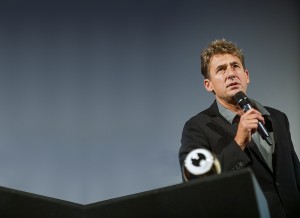 Tim Bevan
 Thekla Reuten
 Rachael Joy
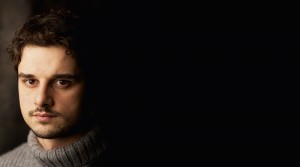 Nikola Rakocevi
 Nadja Schildknecht
 Michael Bully Herbig
 Lars Jessen
 Helen Hunt
 Douglas Trumbull
 Dieter Kosslick, Director Berlin International Film Festival
 Benoit Delhomme
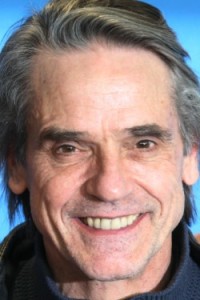 Jeremy Irons