




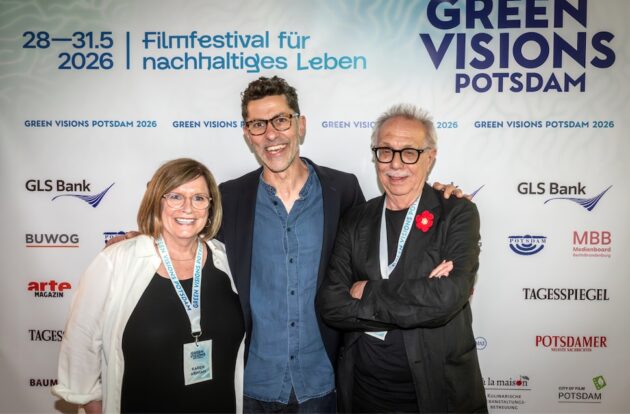
Circular economy in construction, renaturation and rewilding, exploration of the deep sea, rights of nature as well as melting glaciers were the key topics in 24 feature film, documentaries, and animated movies that were presented by the 3rd edition of Green Visions Potsdam festival from May 28 to 31, 2026. The event features films which are accompanied by scientists who give an insight in complex coherencies. Every screening is followed by a talk with filmmakers and experts who discuss challenges and potential solutions.
 Sustainable services and products were offered at the ‘Market for Sustainable Living’, which was located in front of the Filmmuseum Potsdam, that served as the main venue for the four-day event. At the market, audiences can taste organic food and drinks, find out more about traditional seeds as well as the impact of renewables. “Right now, we are seeing once again how dependent our society still is on oil and gas and how this continues to generate greenhouse gas emissions. This makes it all the more important to expand renewable energy and consistently utilize the sun’s free energy”, emphasizes Festival Director Dieter Kosslick. “Many people have long understood this and are taking action themselves: In Germany, many photovoltaic systems can be seen on rooftops, and in a short time, around 1.5 million balcony power plants have been installed. This shows that the energy transition has long since begun in many households.”
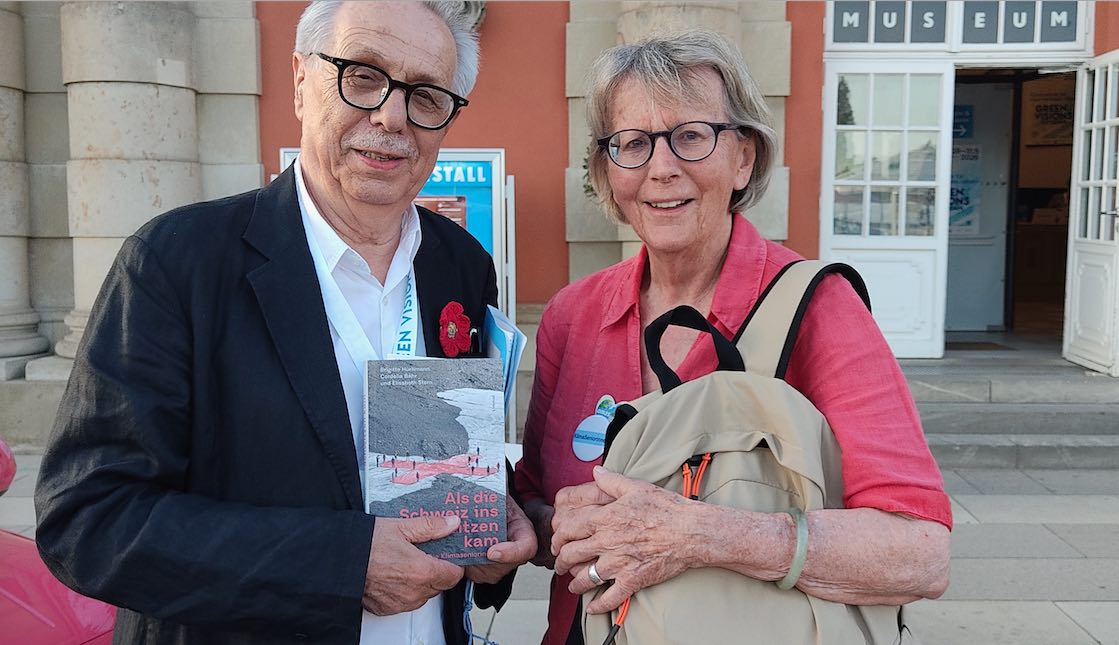 The festival kicked off with the German premiere of the documentary Trop Chaud by Benjamin Weiss that takes a look behind the scenes of the fight against climate change. With courage and commitment, Climate Seniors decided to take on their own country and file a complaint with the European Court of Human Rights (ECHR) against the Swiss government, alleging that it is failing to adequately protect their health. The seventy-something Climate Activist Elisabeth Stern gave an insight into the eight-year battle that culminated in the spectacular ruling by the ECHR that climate protection is a human right.
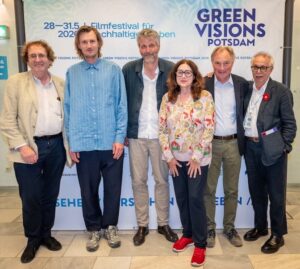 The human health is also affected by toxic substances that linger in many buildings. “We need to build houses that have a use for the environment and can even provide nutrition”, stated Prof. Dr. Michael Braungart, innovator of the eco-design concept Cradle to Cradle: Products should be designed to function within material cycles, so that there is no unnecessary waste, only useful raw materials. The concept of ‘circular architecture’ was applied by the Danish architect Søren Pihlmann, who converted the Danish Pavilion at the 2025 Venice Biennale by using only materials he found within the exhibition building. This process is documented in the film Materials Matter by Marc-Christoph Wagner and Simon Weyhe. The German film A House Made of Rubbish by Tatjana Mischke and Valentin Thurn shows how Berlin’s first house was made of waste.
A topic that often stirs up strong emotions is the restoration of natural habitats and the reintroduction of wildlife. In the British documentary Wild Land – The Return of Nature, David Allen follows a couple who are returning their dilapidated, 400-year-old estate to nature. Instead of plowing it, they let it run wild and watch as species return and the landscape renews itself—a process viewed with suspicion by the public. Renaturation projects can also be implemented on a small scale to promote biodiversity.
 In Potsdam, for example, NABU is creating biotopes to provide a habitat for frogs and toads, as reported by Lutz Kolbmüller, who serves on the board of the nature conservation organization in the Bornstedt district. In the British documentary Derek vs. Derek by James Dawson, the very different approaches of two English farmers whose fields are directly adjacent to one another clash.
A growing number of people believe that ecosystems should be granted the same rights as people and businesses. In the Belgian film Nature’s Guardians, Audrey Lavis follows people who are rethinking our relationship with nature. Ecuador is the first country in the world to have enshrined the rights of nature in its constitution. The first European country where an ecosystem has its own legal status is Spain. There, 600,000 people successfully campaigned to save the polluted Mar Menor lagoon.
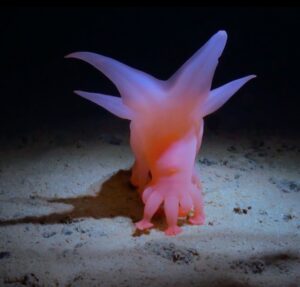 70 percent of our planet lies hidden in the deep sea. In this untouched habitat, unknown animals live in a place characterized by cold, pressure, and darkness. Their existence is threatened by companies like The Metals Company, which seek to exploit the deep sea by mining manganese nodules. In the documentary How Deep Is Your Love, British filmmaker Eleanor Mortimer takes the audience on a journey where researchers explore the wonders of fantastic creatures living in the dark underwater world.
“Green Visions Potsdam is a small festival with big films,” sums up former Berlinale director Dieter Kosslick. “We show films that inspire hope while raising awareness.”
Photos: © Peter Himsel/Green VisionsPotsdam 2026, Marc Wessel, Eleanor Mortimer


 Robert Redford
 Arnold Schwarzenegger
 Hannes Jaenicke
 Nic Balthazar
 Nadeshda Brennicke, Actress
 Darren Aronofsky, Director, Noah / Jury President, 65th Berlin International Film Festival
 Tim Bevan
 Thekla Reuten
 Rachael Joy
 Nikola Rakocevi
 Nadja Schildknecht
 Michael Bully Herbig
 Lars Jessen
 Helen Hunt
 Douglas Trumbull
 Dieter Kosslick, Director Berlin International Film Festival
 Benoit Delhomme
 Jeremy Irons