




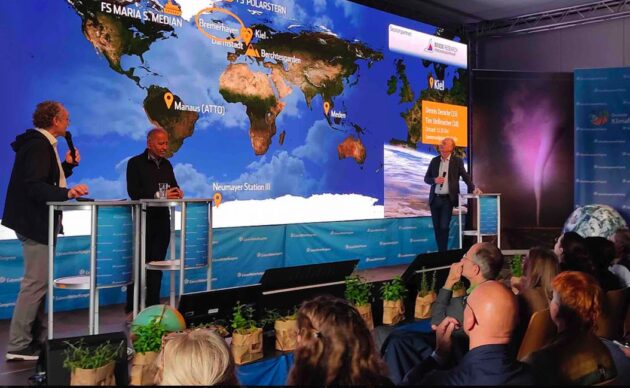
It is an inconvenient truth: energy transition, climate protection, and climate adaptation can’t wait. At the ExtremWetterKongress in Hamburg, climate researchers explained which extreme weather risks result from global warming. Whether it’s heat, heavy rain, or storms: global warming increases the likelihood of certain extreme weather events and their consequences. The trend is particularly clear when it comes to heat: Heat waves have increased significantly in Germany, and the frequency of droughts has also risen.
According to the World Meteorological Organization, a UN agency, August 2026 was the warmest on record globally since measurements began. In France, Spain, Italy, Switzerland, and Austria, the hottest summer on record is now behind us. This trend is part of a rate of global warming unprecedented in human history that has affected the entire planet. Massive wildfires in Europe and record-low water levels in many European rivers offer a glimpse into the future of Europe’s weather for the coming decades.
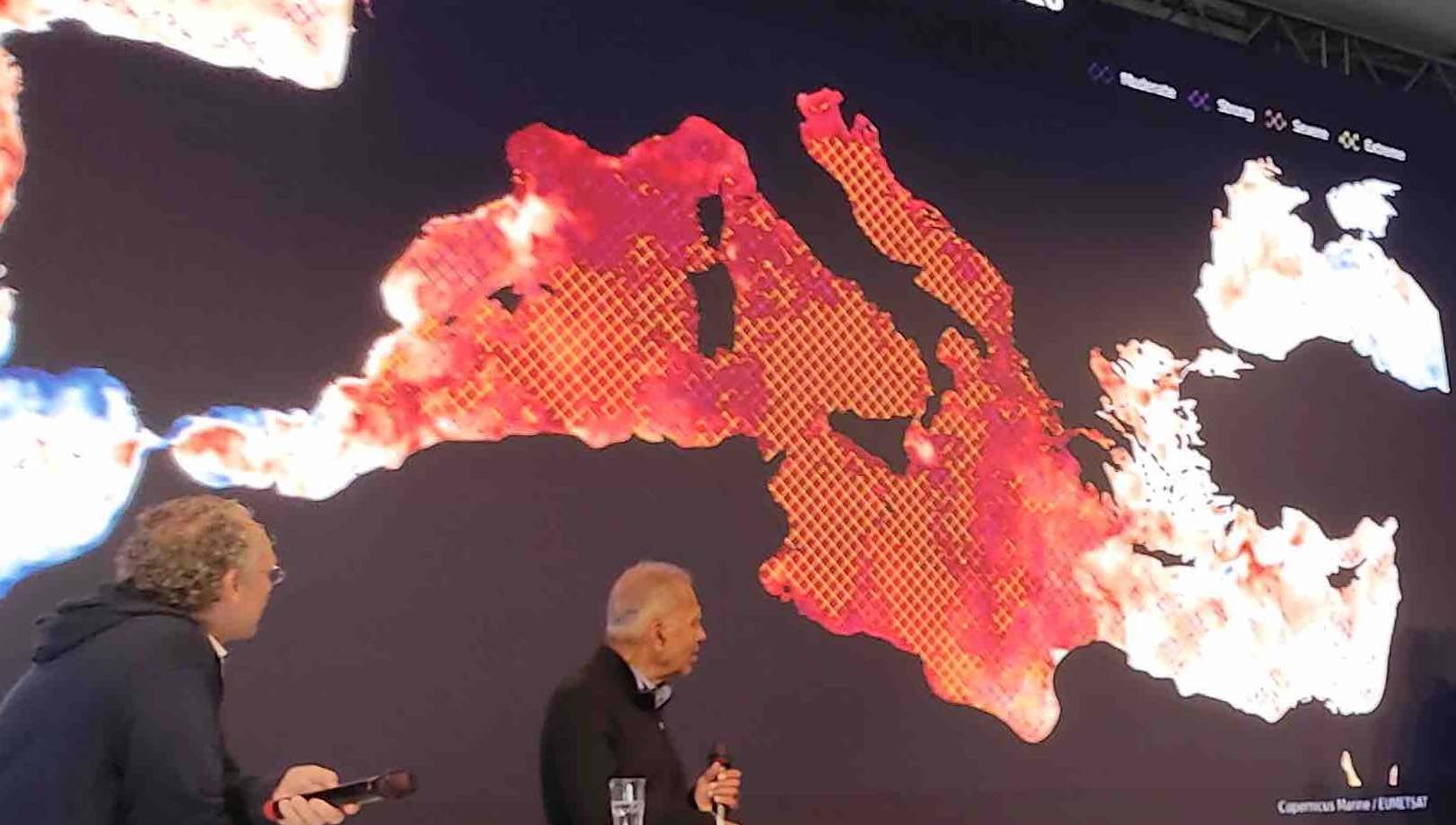 Many upcoming summers could be even hotter than 2026. The Deutscher Wetterdienst (DWD) presented its latest findings on extreme weather events in Germany at the ExtremWetterKongress in Hamburg. At more than 95 percent of DWD stations, new daily or monthly records were set during the three summer months.
Scientists view the planet as undergoing a dramatically rapid and dangerous process of change. The 1.5-degree limit can no longer be considered sustainable. The 2-degree limit, too, will be impossible to maintain without stronger political action. “Since the international community currently lacks the capacity to implement and strengthen the necessary climate protection measures, climate adaptation is taking on crucial importance, especially for countries like Germany,” emphasizes Frank Böttcher, chairman of the ExtremWetterKongress.
Germany’s hesitation on climate action costs the country around 11 billion euros every year. “According to a recent study, the extreme summer of 2026 alone caused economic damage in Germany amounting to around 36 to 42 billion euros,” says Prof. Dr. Claudia Kemfert, head of the Energy, Transportation, and Environment Division at the German Institute for Economic Research (DIW in Berlin). “That corresponds to about 0.8 to 0.9 percent of annual economic output. The actual costs are likely even higher, because numerous ecological and indirect consequential damages cannot yet be fully quantified.”
For most climate protection measures, there are now solutions whose benefits save more money than the investment costs. “Fascist parties cast doubt on science and deny climate change,” says climate activist Luisa Neubauer. “We must stand up against this when an alliance of the fossil fuel industry and fascist parties in many countries around the world is working to divide society, cast doubt on science, and deny the human-caused climate crisis.”
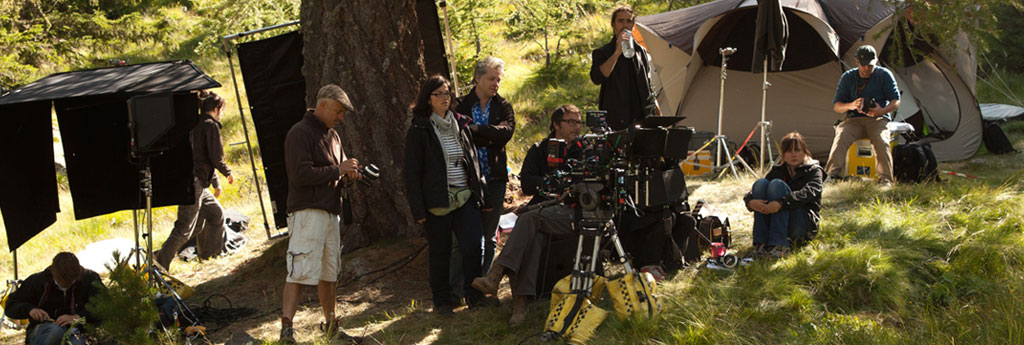
Climate deniers in the media are a PR success for the oil industry. The consequences of global warming were brought home to director Alejandro González Iñárritu in 2015 when he had great difficulty finding ice in Argentina while filming his movie The Revenant. During the filming of his latest movie, Digger, fiction became reality. “The things we imagined nine years ago are starting to happen,” says Iñárritu. “Back then, no ice shelves had broken off yet. Greenland wasn’t an issue; methane wasn’t yet a common term in the media. Now methane is one of the biggest monsters of all time.”
The Hollywood production Digger, starring Tom Cruise in the title role, explores the causes of global warming, its potentially catastrophic effects, and those responsible. At the center of this American film satire is an oil tycoon who triggers a global catastrophe when one of his oil rigs strikes the Greenland ice shelf. The escaping methane leads to an explosion that breaks off a substantial chunk of the ice shelf. As a result, a gigantic iceberg drifts toward the European coast, causing tsunamis and flooding in parts of Europe. Outraged activists accuse Digger of genocide. Although he knew that burning oil and gas would lead to a planetary catastrophe, he deceived the public and concealed the risks.
“The warming of the oceans and the atmosphere is affecting global circulation all the way to high latitudes,” explains Prof. Dr. Gesine Mollenhauer, deputy director at the Alfred Wegener Institute. The fundamental changes in the polar regions are leading to significant changes in the climate and ecosystem, as well as in the living conditions of local people.
Photos: ©GFS



 Robert Redford
 Arnold Schwarzenegger
 Hannes Jaenicke
 Nic Balthazar
 Nadeshda Brennicke, Actress
 Darren Aronofsky, Director, Noah / Jury President, 65th Berlin International Film Festival
 Tim Bevan
 Thekla Reuten
 Rachael Joy
 Nikola Rakocevi
 Nadja Schildknecht
 Michael Bully Herbig
 Lars Jessen
 Helen Hunt
 Douglas Trumbull
 Dieter Kosslick, Director Berlin International Film Festival
 Benoit Delhomme
 Jeremy Irons